
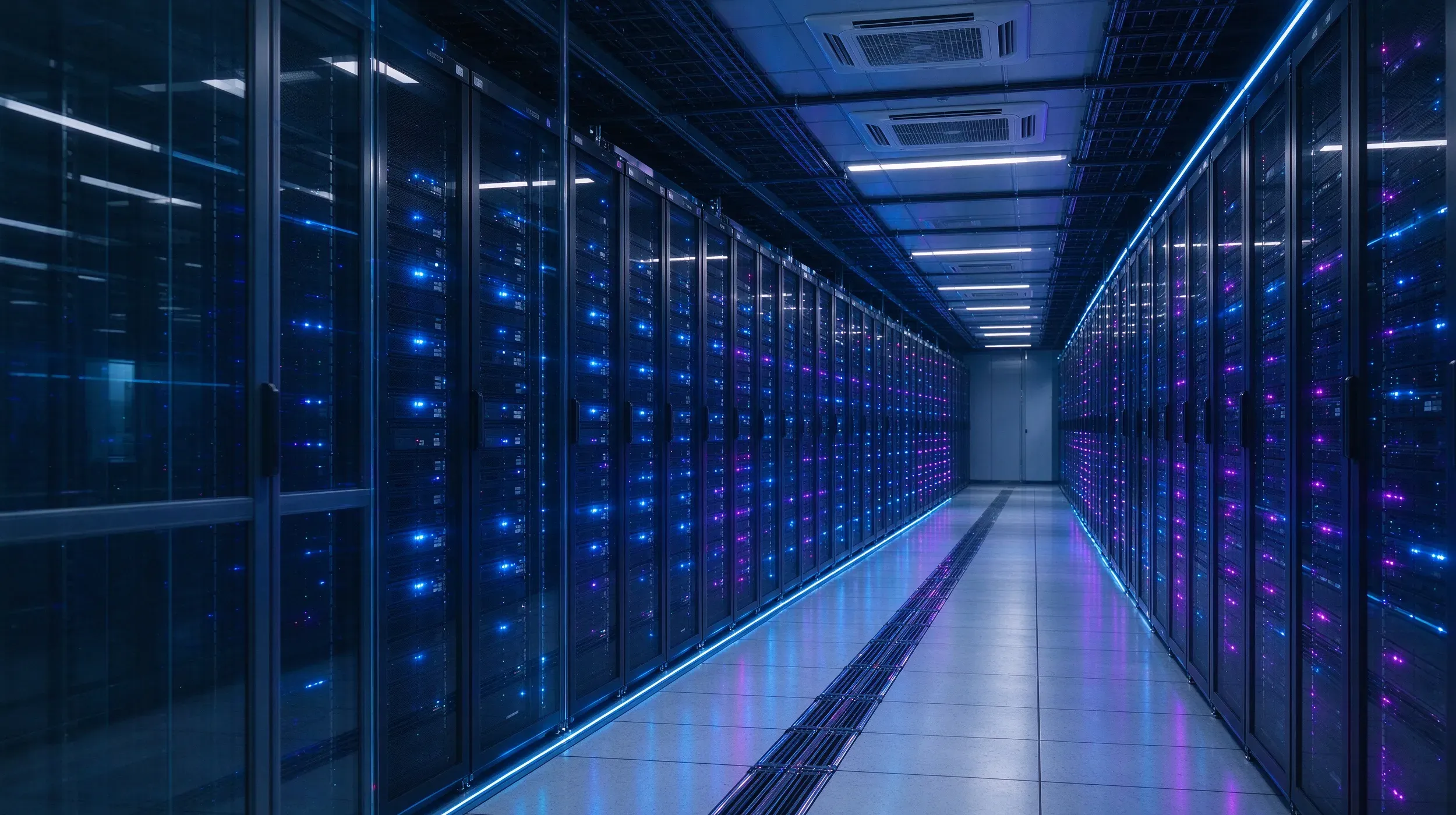
The data center industry, long seen as the invisible backbone of the digital economy, is suddenly finding itself in the spotlight — and not always for the right reasons. Across the United States, Europe, and parts of Asia, governments and local communities are pushing back against the rapid expansion of data center infrastructure. The concerns are mounting, and they are worth understanding for anyone involved in the data center supply chain.
The United States: From Quiet Growth to Public Outcry
In the United States, the tide has turned dramatically. What was once a largely uncontested wave of data center construction has now become a flashpoint for public frustration. Since 2026, protests have erupted across the country, from rural Texas to suburban Indiana, from agricultural communities to urban neighborhoods. In Fredericksburg, Virginia, residents held signs reading, "We live by water, not by data." In Atlanta, protesters declared, "Georgia never voted for hyper-scale AI data centers."
These are not isolated incidents. According to a grassroots organization tracking the industry, at least 75 data center projects were stalled or delayed in the first quarter of 2026 alone, representing roughly 130 billion dollars in investment. By July 2026, more than 530 moratoriums had been recorded across 42 states, with nearly 300 of them added between May and July of that same year.
Some of the most striking actions have come at the local and state level. The city of Monterey Park, California, became the first in the nation to permanently ban new data center construction through a public referendum, passing with an overwhelming 86 percent of the vote. New York State imposed a one-year moratorium on data centers larger than 50 megawatts, becoming the first state in the country to enact a full-scale pause. Pennsylvania issued an executive order requiring data centers to meet environmental and transparency standards, effectively removing their "fast-track" permitting status. Even cities like Raleigh, San Francisco, and Oakland have joined the movement, each passing their own construction moratoriums in late 2026.
So what is driving this backlash? At its core, the conflict comes down to a simple mismatch: the benefits of data centers flow to tech giants, while the costs are borne by local residents. Electricity prices have risen sharply, with data centers contributing to an estimated 6.9 percent increase in wholesale electricity prices nationwide. In Northern Virginia, the heart of the data center world, the increase has been as high as 15 percent. Residential electricity rates in the first quarter of 2026 were up 12 percent year over year, and in Washington State, the increase reached 24 percent.
Water is another flashpoint. Large data centers consume enormous amounts of water for cooling, and companies like Meta have faced lawsuits in Georgia, Wyoming, and other states over water usage. Noise pollution has also become a recurring complaint, with residents in Virginia and Texas describing the constant hum of data center operations as a disruption to their once-quiet neighborhoods.And perhaps most frustrating for local communities, the promised jobs have not materialized. A study by the Brookings Institution found that the number of new jobs claimed by developers is typically exaggerated by a factor of three. A 250,000-square-foot data center, on average, employs only about 50 full-time workers over the long term. For communities sacrificing their land, water, and power, that return on investment is increasingly hard to accept
Europe: Energy Constraints and Structural Reform
Across the Atlantic, Europe is facing its own reckoning with data center expansion. In early November 2026, protests erupted across 15 European countries in what was described as the first coordinated cross-regional resistance to AI data center construction. In just the first four months of 2026, more than 70 data center projects across Europe were rejected or restricted — a number that already exceeded the total for all of 2025.
The regulatory response has been swift and varied. The Netherlands has been among the most aggressive. Amsterdam imposed a moratorium on new data centers in 2019, and in April 2025, the city extended that ban through 2030. Nationally, the Netherlands has restricted hyper-scale facilities to just two designated locations since 2022.
Ireland, long a favored destination for data center investment, froze new grid connections in Dublin in 2021. When the freeze was lifted in December 2025, new conditions were attached: projects must now generate their own on-site power. Denmark has taken a different approach, giving new data centers the lowest priority for grid connection, behind residential, medical, and industrial users. In Italy and Portugal, regulators have made water usage, wastewater treatment, and waste heat recovery into one-veto items — meaning a project can be rejected on any one of these grounds alone.
The underlying challenges in Europe are structural. Electricity prices for businesses in the European Union are roughly two to three times higher than in the United States, and natural gas prices are four to five times higher. Grid capacity is severely constrained. In major hubs like Frankfurt, Paris, and Dublin, the queue time for grid connection for computing projects has stretched to seven to ten years.
Water scarcity is another growing concern. With Europe experiencing more frequent droughts, countries along the Rhine River basin and in Southern Europe are tightening their water extraction regulations. These constraints have already forced major project cancellations. Microsoft withdrew from a project in Essex, UK, after being told grid power would not be available until after 2030. OpenAI paused its "Stargate" project in the UK. Google faced a criminal investigation in Finland over ecological and grid-related issues at one of its projects.
Yet despite these headwinds, the European data center market is not shrinking — it is transforming. In the first half of 2026, new lease agreements reached 420 megawatts, nearly five times the volume from the same period the previous year. The key shift is geographic. The traditional "FLAPD" markets — Frankfurt, London, Amsterdam, Paris, and Dublin — now account for only 37 percent of new capacity. The remaining 63 percent is flowing to secondary markets: the Nordic hydropower clusters, Spain, Portugal, and Poland.
Regulation is also becoming more sophisticated. New rules now require any data center above 500 kilowatts to fully disclose its energy consumption, water usage, and waste heat utilization data. Mandatory waste heat recovery and water recycling are becoming standard requirements across the continent.
Thailand: Southeast Asia's Regulatory Awakening
The trend is not limited to the West. In Southeast Asia, Thailand has emerged as one of the most active data center investment destinations, with applications for data center projects reaching 728 billion Thai baht in 2025 — seven times the level from the year before. But the regulatory framework has not kept pace with the investment boom, and the government is now playing catch-up.
Thailand currently has no unified regulatory system for data centers, with approvals scattered across multiple agencies. That is beginning to change. The National Broadcasting and Telecommunications Commission is considering reclassifying data centers from a Type 1 category, which allows majority foreign ownership, to a Type 3 category, which would require Thai majority control.
The Board of Investment has also introduced a tiered incentive system. Starting in July 2025, highly efficient data centers that meet PUE targets receive eight years of tax exemption, while standard data centers receive only five years. New local content requirements mandate that at least 50 percent of management and professional positions be filled by Thai nationals within three years.
Resource reviews have also been strengthened, with new assessments required for energy readiness, water management, environmental impact, and urban planning compliance. Thailand's experience mirrors a broader trend across Asia: governments are realizing that data center investments, while welcome, must be balanced against local resource constraints and community needs.
What This Means for the Industry
Looking across these three regions, several clear patterns emerge. First, the era of unchecked data center expansion is over. More than 100 cities and counties worldwide have now imposed some form of ban or restriction on new data center construction flags.
Second, the core conflict is one of value distribution. The financial returns from computing power flow primarily to global technology companies, while the costs — higher electricity prices, strained water resources, noise, and land use — are borne by local residents. This imbalance is driving the political backlash.
Third, energy and water have become the binding constraints. Aging electrical grids cannot keep pace with the explosive growth in demand driven by AI workloads. Water availability is emerging as a potential veto point for projects in drought-prone regions.Fourth, the jobs argument is losing credibility. The long-term employment generated by data centers is far lower than what developers typically promise, making it harder to justify the local sacrifices required.
Finally, the industry is undergoing a structural shift. Capacity is moving away from traditional hub markets toward secondary locations with abundant green energy and more permissive regulatory environments. Air-cooled, water-intensive designs are being phased out in favor of liquid cooling, waste heat recovery, and water recycling technologies.
The debate over AI infrastructure is far from settled. But one thing is clear: the days of building first and asking questions later are over. For suppliers, contractors, and investors in the data center ecosystem, understanding these trends is no longer optional — it is essential.